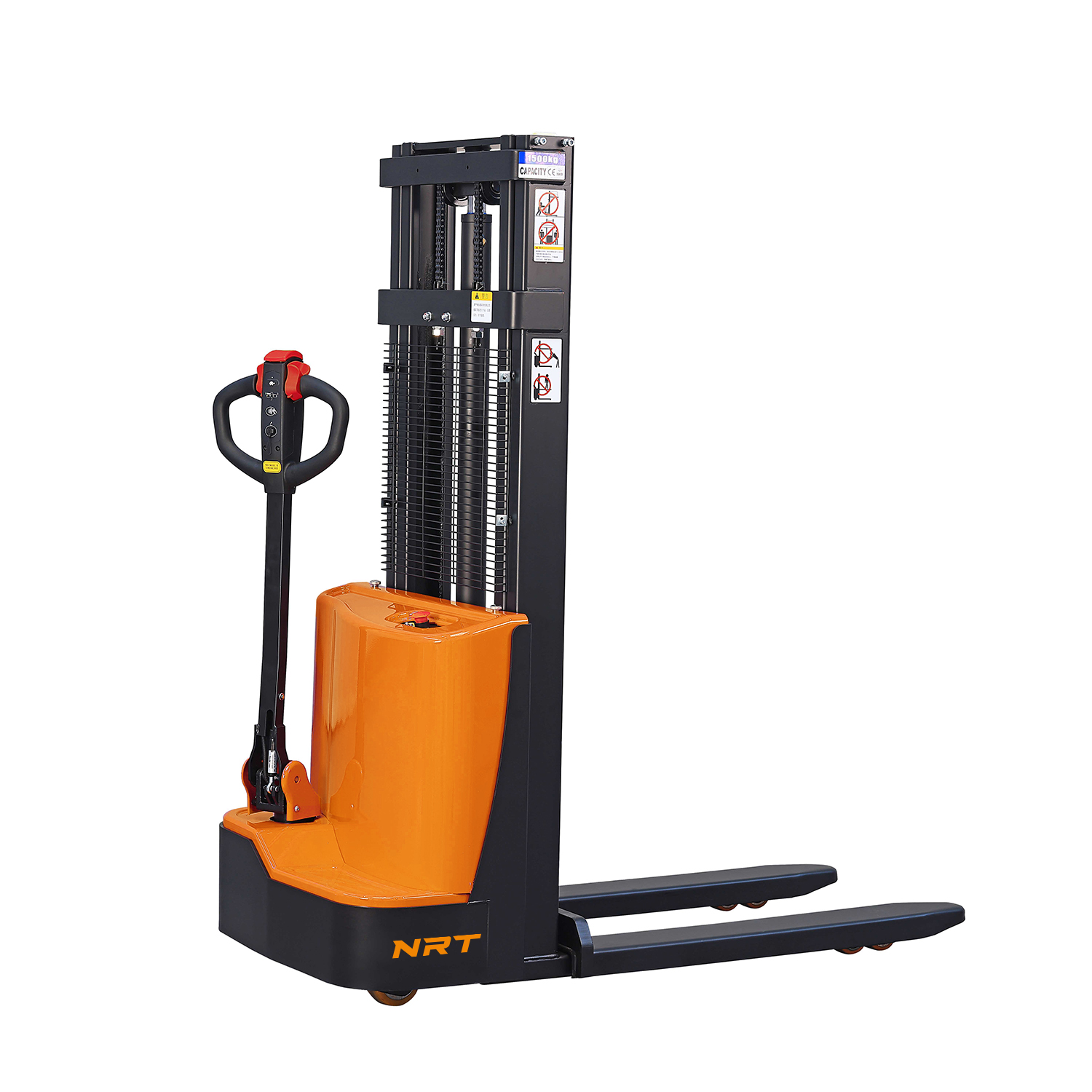
Views: 0 Author: Site Editor Publish Time: 2026-10-08 Origin: Site
Loading docks frequently become severe operational bottlenecks. Inefficient truck turnaround times delay driver delivery schedules and place a heavy physical toll on warehouse staff. Relying on manual pallet jacks causes extreme fatigue and slows down operations. Conversely, using oversized sit-down forklifts inside tight trailer spaces introduces severe safety risks. Operators face load instability, dock plate accidents, and prolonged loading cycles. These delays limit the number of deliveries a driver can complete daily. You need a practical middle ground. The Electric Pallet Stacker serves as the optimal solution for dock operations. It perfectly balances motorized lifting power with the compact footprint necessary for efficient trailer navigation. You will learn how to operate this equipment safely, evaluate dock environments, and maximize throughput without compromising safety.
Operational Efficiency: Proper utilization of an electric pallet stacker reduces truck loading/unloading times by automating both propulsion and vertical lifting, directly increasing daily throughput.
Environmental Prerequisites: Safe operation requires specific dock conditions, including verified dock plate weight capacities and manageable ramp inclines.
Equipment Selection: Choosing between a standard stacker and an electric walkie pallet stacker depends heavily on trailer dimensions, shift duration, and load weight.
Risk Mitigation: Operator training, pre-shift inspections, smooth acceleration techniques, and strict adherence to load center guidelines are non-negotiable for preventing tip-overs and product damage.
A successful loading dock operation hinges on strict performance metrics. You must achieve sub-45-minute trailer turnarounds. You must maintain zero safety incidents. You must ensure minimal product damage during transit transitions. Achieving these metrics requires equipment that matches the physical constraints of a standard 53-foot trailer. Heavy counterbalanced forklifts often fail these criteria due to their massive turning radii and high weight, which can easily punch through aging wooden trailer floors. Refrigerated trailers present even tighter constraints due to thick insulated walls and internal air chutes, demanding a narrower equipment profile.
Warehouse managers typically choose between three equipment categories for dock work. Manual pallet jacks cause high physical strain. They offer no vertical lift capabilities. Operators must physically pull heavy loads up inclined dock plates, requiring immense starting force that leads to frequent shoulder and back injuries. Semi-electric stackers provide motorized lift but still require manual pushing. This design fails completely on ramp inclines, as operators cannot manually push a 2,000-pound load uphill.
Fully electric pallet stackers provide both motorized lift and drive. They represent the baseline requirement for high-volume operations. They integrate hydraulic systems and motorized propulsion. This combination delivers smoother movement and superior load control. Utilizing a Pallet Stacker for Transport and Logistics ensures your team can move heavy freight up inclines without physical exertion. The AC drive motors deliver consistent torque, allowing the machine to crawl over dock plate lips without stalling.
Trailer interiors present hostile environments for material handling. Space is severely restricted. Floors can be uneven, grooved, or littered with debris. A Pallet Walkie Stacker Forklift provides a distinct advantage here. Its compact chassis allows it to operate in aisles as narrow as seven feet. The tiller-arm steering mechanism provides exceptional maneuverability, often allowing a full 180-degree steering arc.
Operators walk behind the unit, giving them a clear line of sight to the fork tips and the surrounding trailer walls. This visibility prevents product damage and allows for tight, efficient pallet placement. Unlike sit-down forklifts where the mast obstructs forward vision, the walk-behind design keeps the operator grounded, aware of their surroundings, and physically separated from the lifting mechanism.
Equipment failure inside a trailer halts all loading operations. You must verify charge levels before entering any truck. A depleted battery leaves the machine stranded on a dock leveler or inside a truck. Extracting a dead stacker requires towing equipment, chains, and causes massive dock delays. Follow this specific sequence before starting your shift:
Check the dashboard battery discharge indicator to ensure at least a 30% charge remains.
Inspect the battery cables and connectors for any signs of fraying, corrosion, or exposed wiring.
Unplug the charging power cord from the wall receptacle.
Properly stow the charging cord inside the designated compartment on the machine.
Test the emergency power disconnect switch to verify it cuts power immediately when struck.
Operators sometimes forget to stow the charging cable. Driving away with the cord plugged in rips the wiring from the wall. This creates immediate electrical shorts, fire risks, and severe tripping hazards on the warehouse floor.
The hydraulic system bears the entire weight of your freight. You must inspect it thoroughly before every shift. Look at the base of the lift cylinder for pooled hydraulic fluid. Leaks indicate compromised seals. A blown seal can cause a sudden load drop, crushing anything beneath the forks. Inspect the mast channels for debris like shrink wrap or broken pallet wood, which can jam the rollers.
Check the lift chains for proper tension and adequate lubrication. Dry chains wear out quickly and can snap under heavy loads. Inspect the forks for structural integrity. Look for hairline cracks near the heel of the fork, as this 90-degree bend absorbs the most stress during lifting. Never operate a stacker with bent or cracked forks.
Electric stackers have specific environmental limitations. You must evaluate dock plate load capacities. Calculate the total combined weight. Add the stacker weight, the battery weight, and the maximum load weight. Many light-duty edge-of-dock levelers cannot support this combined mass. Exceeding the capacity causes the plate to collapse, sending the machine and operator falling into the truck well.
Address the limitations of stacker underclearance. Stackers sit very low to the ground to maintain stability. Steep dock ramps or uneven transition plates cause the machine to scrape. In severe cases, the machine becomes high-centered on the crown of the dock plate. The drive wheel lifts off the ground, leaving the stacker completely immobilized with its wheels spinning freely.
Proper alignment dictates the safety of the entire lift. Approach the pallet squarely. Ensure both forks align perfectly with the pallet openings. Drive forward until the forks are fully inserted. The load must rest flush against the vertical load backrest. This positioning maintains the intended center of gravity. If the load sits too far forward on the fork tips, the stacker loses stability. The rear drive wheel loses traction, and the machine can tip forward. Proper engagement also prevents costly pallet splintering, which leaves debris on the trailer floor that can derail the stacker's load wheels.
Crossing the dock plate requires precise throttle control. You must start slow and accelerate gently. Electric motors provide instant torque. Sudden acceleration jerks the machine forward. This motion causes unstable loads to shift or fall off the forks completely. Maintain a steady, low speed when crossing the transition plate from the warehouse floor to the trailer.
You must follow the fundamental rule of ramp travel: always travel with the load facing uphill on inclines. This orientation uses the load's weight to press against the backrest, preventing the pallet from sliding off the forks due to gravity.
Trailer Position Relative to Dock | Entering the Trailer (Loaded) | Exiting the Trailer (Loaded) |
|---|---|---|
Trailer is ABOVE Dock Level | Drive forward up the ramp. Load faces uphill. | Back down the ramp. Load faces uphill. |
Trailer is BELOW Dock Level | Back down the ramp. Load faces uphill. | Drive forward up the ramp. Load faces uphill. |
Operating inside a trailer requires acute spatial awareness. You must account for ceiling height restrictions. Keep the forks raised just enough to clear the floor—usually two to three inches. Lifting the load too high while driving alters the center of gravity and increases the risk of tipping if you hit a groove in the trailer floor.
Utilize the stacker's tight turning radius to maximize trailer space. Use a technique called pinwheeling. This involves turning rectangular pallets sideways to fit more freight side-by-side. The tiller-arm design allows you to swing the drive unit 90 degrees, placing pallets tightly against the trailer walls without leaving wasted gaps. Always leave a few inches of clearance between the pallet and the wall to allow for easy extraction at the destination.
Never reverse the stacker while the load is elevated high in the air. Lower the forks completely before moving backward. Once the pallet rests firmly on the trailer floor, lower the forks an additional inch to ensure they move freely. Look over your shoulder to verify the path is clear. Pull the tiller arm down to the operating position and gently apply reverse throttle.
Always keep your body positioned to the side of the tiller arm, never directly in front of it. The belly-button reversing switch sits at the end of the tiller head. If you become trapped between the stacker and a trailer wall, the switch presses against your body. It instantly reverses the machine's direction, preventing severe crushing injuries. Test this switch daily to ensure it functions correctly.
Unloading presents unique challenges. Transit vibrations cause freight to shift. Hard braking by the truck driver can cause pallets to slide forward, interlocking with one another or leaning heavily against the trailer walls. Extracting tightly packed loads requires patience. Do not use the stacker to ram or pry pallets apart. This damages the equipment, bends the forks, and destroys the product.
Instruct operators to use the stacker's precise hydraulic controls. Insert the forks carefully into the pallet pockets. Gently lift the load just enough to take the weight off the floor. Use the motorized drive system to slowly pull the pallet straight back. The electric motor provides smooth, consistent extraction. This method is far superior to manual alternatives, which require violent jerking motions that tear pallet boards and cause product to spill.
Moving heavy freight out of a trailer and down a dock ramp alters the machine's physics. The operator must remain uphill of the load at all times. You must control the descent speed meticulously. Use the stacker's regenerative braking system. Releasing the throttle automatically engages the brake, slowing the AC motor.
Do not ride the mechanical brake or attempt to manually hold the machine back with your body weight. Let the regenerative system manage the momentum. This prevents runaway momentum and keeps the heavy load firmly under the operator's control. If the machine begins to slide on a wet dock plate, immediately lower the forks to drop the load flat onto the plate, stopping the machine's movement instantly.
You must match the equipment to your specific trailer dimensions. Standard dry van trailers have internal heights of approximately 110 inches. You must evaluate the stacker's collapsed mast height. If the mast is too tall, it will strike the top of the trailer door during entry, causing massive structural damage to both the truck and the stacker. You must also evaluate the maximum lift height. Lifting a load too high inside the trailer will punch the mast through the aluminum roof.
Always check the load capacity data plate. A stacker rated for 3,000 lbs at a 24-inch load center will lift significantly less if the load is exceptionally long or irregularly shaped. Train your operators to read and understand load derating charts. Attempting to lift a 3,000 lb load that is 60 inches long will overload the hydraulic system and tip the machine forward.
Selecting the right battery chemistry impacts your entire logistics operation. You must choose between Lead-Acid and Lithium-Ion technologies based on your shift duration, facility infrastructure, and maintenance capabilities.
Feature | Lead-Acid Batteries | Lithium-Ion Batteries |
|---|---|---|
Weight Profile | Heavy. Acts as a natural counterweight for the stacker. | Lightweight. May require additional steel counterweights. |
Maintenance Routine | Requires weekly watering, cleaning, and equalization charges. | Zero maintenance required. Fully sealed units. |
Charging Cycle | Requires full 8-hour charge and 8-hour cool down period. | Allows rapid opportunity charging during 15-minute breaks. |
Best Operational Fit | Single-shift operations with dedicated, ventilated charging rooms. | Multi-shift, high-volume logistics operations with limited space. |
You must choose the correct leg design for your specific pallets. Straddle stackers feature wide outrigger legs that wrap around the outside of the pallet. You must use a straddle design if you handle closed-bottom pallets, such as standard blue CHEP pallets or red PECO pallets. The forks lower between the outriggers to pick up the load without touching the bottom boards.
Fork-over stackers feature legs that sit directly underneath the lifting forks. They have a narrower footprint, making them easier to maneuver in tight spaces. However, they only work with open-bottom pallets, like Euro pallets, or wire mesh baskets. If you attempt to lift a closed-bottom pallet with a fork-over stacker, the lifting forks will rip the bottom boards off the pallet as they rise.
Electric stackers typically feature very low ground clearance. This design keeps the center of gravity low for heavy lifting. However, it creates a severe implementation risk on loading docks. Steep dock plates create sharp angles. When the stacker crosses the apex of the ramp, the belly of the machine can scrape the metal plate. This damages internal components, battery casings, and drive motors.
You must mitigate this by auditing your dock infrastructure before purchase. Measure the maximum gradient of your dock levelers. Most electric stackers cannot negotiate inclines greater than 5% to 8% while loaded. If your docks are steeper, you may need to invest in longer pit-style dock levelers to reduce the angle and create a smoother transition into the trailer.
Do not assume that walk-behind equipment requires no training. You must comply with OSHA 1910.178 (or regional equivalent) requirements. An Electric Walkie Pallet Stacker is classified as a Class III powered industrial truck. Operators must be formally trained and evaluated before use.
Training must cover motorized propulsion dynamics. Operators must understand how the machine corners and how the swing radius affects pedestrians. They must learn hydraulic load management and practice navigating ramps safely. Document all training sessions. Conduct practical evaluations on the actual loading dock, having the operator load and unload a test trailer. Failure to certify operators leads to severe safety violations and increased workplace accidents.
Audit your loading dock inclines and transition plates to ensure they do not exceed the stacker's maximum gradeability.
Inventory your pallet types to definitively choose between a straddle or fork-over leg configuration.
Schedule an on-site demonstration with a dealer to test the equipment inside your specific trailers.
Develop and mandate a formal operator safety training program prior to full equipment deployment.
A: Yes, but with strict limitations. Most electric stackers can only handle maximum gradients of 5% to 10%. Steep ramps pose a severe risk of the machine grounding out (high-centering) due to its low ground clearance. Always travel with the load facing uphill to maintain stability.
A: Electric pallet jacks only lift loads a few inches off the floor for horizontal transport. Electric pallet stackers feature a vertical mast and integrated hydraulic systems. This allows stackers to lift loads several feet into the air for stacking, racking, and loading trailers.
A: Yes. Under OSHA regulations, electric walkie stackers are classified as Class III powered industrial trucks. Operators must receive formal instruction, practical training, and a documented performance evaluation before they are legally permitted to operate the equipment.
A: Standard capacities typically range from 2,000 to 4,000 lbs. However, this capacity is based on a specific load center (usually 24 inches). If the load is longer or irregularly shaped, the safe lifting capacity decreases significantly. Always consult the machine's data plate.
A: Generally, no. They are designed for flat, indoor concrete surfaces. Their polyurethane wheels lose traction on wet, icy, or rough outdoor asphalt. Furthermore, most standard models lack the high IP ratings required to protect electrical components from rain and heavy moisture.
A: A standard lead-acid battery typically lasts for one 8-hour shift under intermittent use. Continuous, heavy lifting drains it faster. Lithium-ion batteries offer similar run times but allow for rapid opportunity charging during breaks, effectively supporting multi-shift operations without needing battery swaps.